

HR system implementation: a practical guide for Australian businesses
TL;DR:
- HR system implementation involves selecting, configuring, and deploying HR software to centralize human resource functions and improve data management. Proper planning and phased testing reduce risks, ensure data accuracy, and promote staff adoption, leading to more efficient HR operations. Cloud-based platforms offer faster setup, ongoing updates, and easier integration, making implementation smoother and more adaptable.
HR system implementation is the structured process of selecting, configuring, and deploying HR software to centralise and automate core human resource functions across an organisation. Known formally as HRIS (Human Resource Information System) implementation, this process covers everything from requirements gathering and data migration through to user training and post-launch support. Done well, it replaces disconnected spreadsheets and manual processes with a single source of truth for your people data. For Australian businesses navigating Fair Work compliance, payroll accuracy, and workforce reporting, getting this process right matters more than most leaders realise.
What is HR system implementation?
HR system implementation is a complex process best managed through a comprehensive project plan that outlines key steps and timelines. The goal is not simply to install software. It is to change how your organisation captures, manages, and acts on people data. A well-executed HRIS implementation reduces manual data entry, improves compliance tracking, and gives HR teams the reporting capability to make faster decisions.

The business case is clear. HRIS platforms improve decision-making by providing centralised HR data, reporting, and analytics that HR leaders and executives can act on immediately. That shift from reactive administration to proactive workforce management is the real return on investment.
What does the implementation process involve?
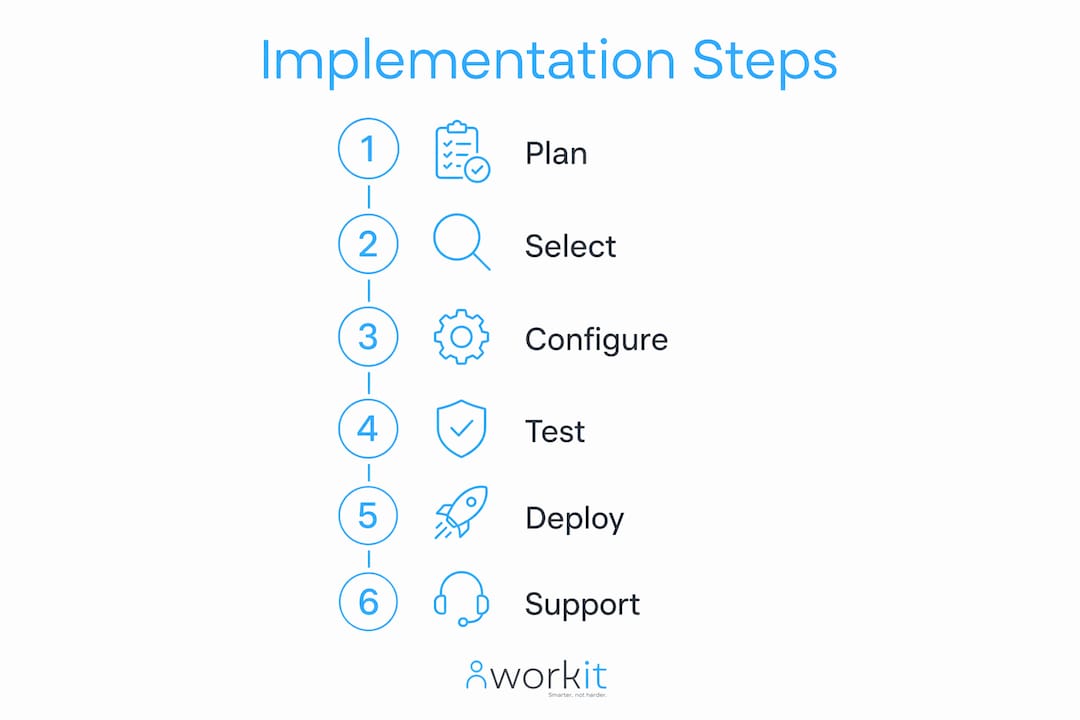
The HRIS implementation lifecycle follows a logical sequence. Skipping steps or compressing timelines is the most common reason projects fail.
-
Requirements gathering. Define what your organisation needs from the system. Engage stakeholders from HR, payroll, finance, and IT early. Their input shapes configuration decisions that are difficult to reverse later.
-
Vendor evaluation and selection. Choosing the right HR system requires balancing features, organisational requirements, cost, and vendor support. Involve an evaluation team and document your selection criteria before you speak to any vendor.
-
Data cleansing and migration. This is where most projects lose time. Organisations should allocate 30–50% more time than expected for auditing and cleaning HR data before migration. Dirty legacy data breaks automated workflows and causes errors that surface weeks after go-live.
-
System configuration. Map your HR processes to the system’s modules. Configure leave rules, approval workflows, onboarding checklists, and compliance settings to reflect how your business actually operates.
-
Integration with existing tools. Connect the HRIS to payroll, finance, and any other business systems your teams rely on. APIs and pre-built integrations reduce duplication and increase automation across HR functions. This is what system integration in HR means in practice: your data flows between platforms without manual re-entry.
-
Phased testing with pilot groups. Testing in phases with selected departments allows feedback collection and error fixing before broad deployment. A pilot group of 10–20 employees in one department will surface configuration problems that no amount of internal testing reveals.
-
Training and go-live support. Comprehensive employee training with custom documentation reflecting company-specific configurations is non-negotiable. Training must happen before and after go-live, using both live sessions and self-guided materials. Your onboarding support practices for staff adoption directly determine how quickly the system delivers value.
Pro Tip: Build a simple HR technology roadmap before you begin. Map out which modules you will activate at launch versus which you will phase in over the first six months. This prevents scope creep and keeps the project team focused.
How does a cloud-based HR system affect implementation?
A cloud-based HR system operates on a Software-as-a-Service (SaaS) model, which changes the implementation experience significantly compared to on-premise software. Understanding these differences helps you plan more accurately.
Key characteristics of cloud HR platforms include:
- Reduced IT overhead. Cloud platforms centralise HR functions and operate without on-site servers, reducing the burden on your internal IT team during and after implementation.
- Accessibility from anywhere. Employees and managers can access the system from any device with an internet connection. This matters for Australian businesses with distributed teams or remote workers.
- Faster configuration cycles. Cloud vendors manage infrastructure, so your implementation team focuses on configuration and data rather than server setup and software installation.
- Built-in integration capability. Strong integration capabilities with payroll, finance, and applicant tracking improve data consistency and reduce the manual work of reconciling records across systems.
- Ongoing updates and compliance alignment. Cloud systems receive regular updates from the vendor. For Australian businesses, this means Fair Work and superannuation rule changes can be reflected in the platform without a separate upgrade project.
- Vendor partnership is ongoing. Cloud-based HR implementation is an ongoing partnership requiring planned change management and user adoption strategies. You are not buying a product once. You are entering a long-term relationship with a vendor who shapes how your HR technology evolves.
Platforms designed for flexible team management demonstrate how cloud-based tools can adapt to varied workforce structures, which is a useful benchmark when evaluating integration depth during your selection process.
What are the common pitfalls in HR system implementation?
Most implementation failures share the same root causes. Knowing them in advance gives you a real advantage.
- Underestimating data cleansing. This is the most overlooked phase. Legacy HR data accumulated over years in spreadsheets is rarely clean. Duplicate records, inconsistent formatting, and missing fields all create problems during migration. Budget more time here than feels necessary.
- Insufficient training. Deploying a system without adequate training produces low adoption rates. Staff revert to old habits, and the investment delivers little return. Training must be role-specific, not generic.
- Poor stakeholder communication. When payroll, finance, and department managers are not kept informed throughout the project, resistance builds. Regular updates and clear timelines reduce friction at go-live.
- Skipping phased testing. Rolling out to the entire organisation without a pilot group is a high-risk approach. A single configuration error can affect every employee’s leave balance or pay record simultaneously.
- Neglecting post-launch support. Implementation teams and vendor experts should be available after go-live to assist users and resolve issues during the critical first weeks. This is when adoption either takes hold or collapses.
Before you select a vendor, use an HR software feature checklist to confirm the platform covers your compliance, reporting, and integration requirements. Gaps discovered after contract signing are expensive to address.
Pro Tip: Negotiate your support agreement before signing. Specify response times, dedicated contacts, and post-go-live support hours in writing. Vendors are most flexible on support terms before the contract is signed.
How do you measure the success of your implementation?
Measuring outcomes after go-live tells you whether the implementation delivered its intended value and where to focus improvement efforts.
| Metric | What to measure |
|---|---|
| Time savings | Hours saved per week on manual HR tasks such as leave approvals and reporting |
| Error reduction | Decrease in payroll errors, duplicate records, and compliance breaches |
| User adoption rate | Percentage of employees actively using the system within 60 days of go-live |
| Employee satisfaction | Feedback scores from staff on system usability and HR responsiveness |
| Reporting capability | Number of reports your team can now generate without external assistance |
Collecting employee feedback through structured surveys at 30, 60, and 90 days post-launch gives you a clear picture of adoption trends. System utilisation analytics, available in most modern HRIS platforms, show which modules are being used and which are being ignored. That data drives the iterative improvements that turn a functional implementation into a genuinely useful one.
A web-based HR platform that surfaces usage analytics in real time makes this measurement process significantly easier, particularly for teams managing multiple locations or workforce types.
Key takeaways
A successful HR system implementation requires thorough data preparation, phased testing, and sustained post-launch support to deliver lasting efficiency gains.
| Point | Details |
|---|---|
| Data cleansing is critical | Allocate 30–50% more time than planned for auditing and cleaning legacy HR data before migration. |
| Phased testing reduces risk | Pilot with a small department first to catch configuration errors before full deployment. |
| Training drives adoption | Role-specific training before and after go-live determines whether staff actually use the system. |
| Cloud HR is a partnership | Ongoing vendor support, updates, and change management are part of the implementation, not extras. |
| Measure outcomes actively | Track time savings, error rates, and adoption rates at 30, 60, and 90 days post-launch. |
What I have learned from watching implementations succeed and fail
I have seen organisations invest significantly in HR software and walk away with a system that nobody uses. The pattern is almost always the same: the project team focused on the technology and treated the people side as an afterthought.
The single biggest predictor of a successful implementation is not the software you choose. It is how seriously you treat data preparation. Every organisation I have observed that skipped or rushed the data cleansing phase paid for it in the first month after go-live. Payroll errors, missing employee records, and broken approval workflows all trace back to dirty data that was migrated without proper auditing.
The second lesson is that phased rollouts are not optional for organisations with more than 30 staff. Testing with a pilot group feels slow. It is not. It is the fastest path to a clean full deployment because you surface problems at a scale you can actually manage.
The third thing I would tell any business leader starting this process: your implementation timeline is almost certainly too short. Build in buffer for data cleansing, for training iterations, and for the inevitable configuration changes that emerge during testing. A project that takes two weeks longer than planned but launches cleanly is far better than one that hits the original deadline and spends three months in remediation.
Finally, do not underestimate the value of local support. Australian businesses face specific compliance requirements under Fair Work legislation and the National Employment Standards. A vendor with genuine knowledge of the Australian regulatory environment will save you hours of configuration guesswork and protect you from compliance gaps that offshore support teams simply do not know to flag.
— Stephen
Workit makes HR system implementation straightforward
Getting your HRIS implementation right from the start is much easier with a platform built for Australian businesses.
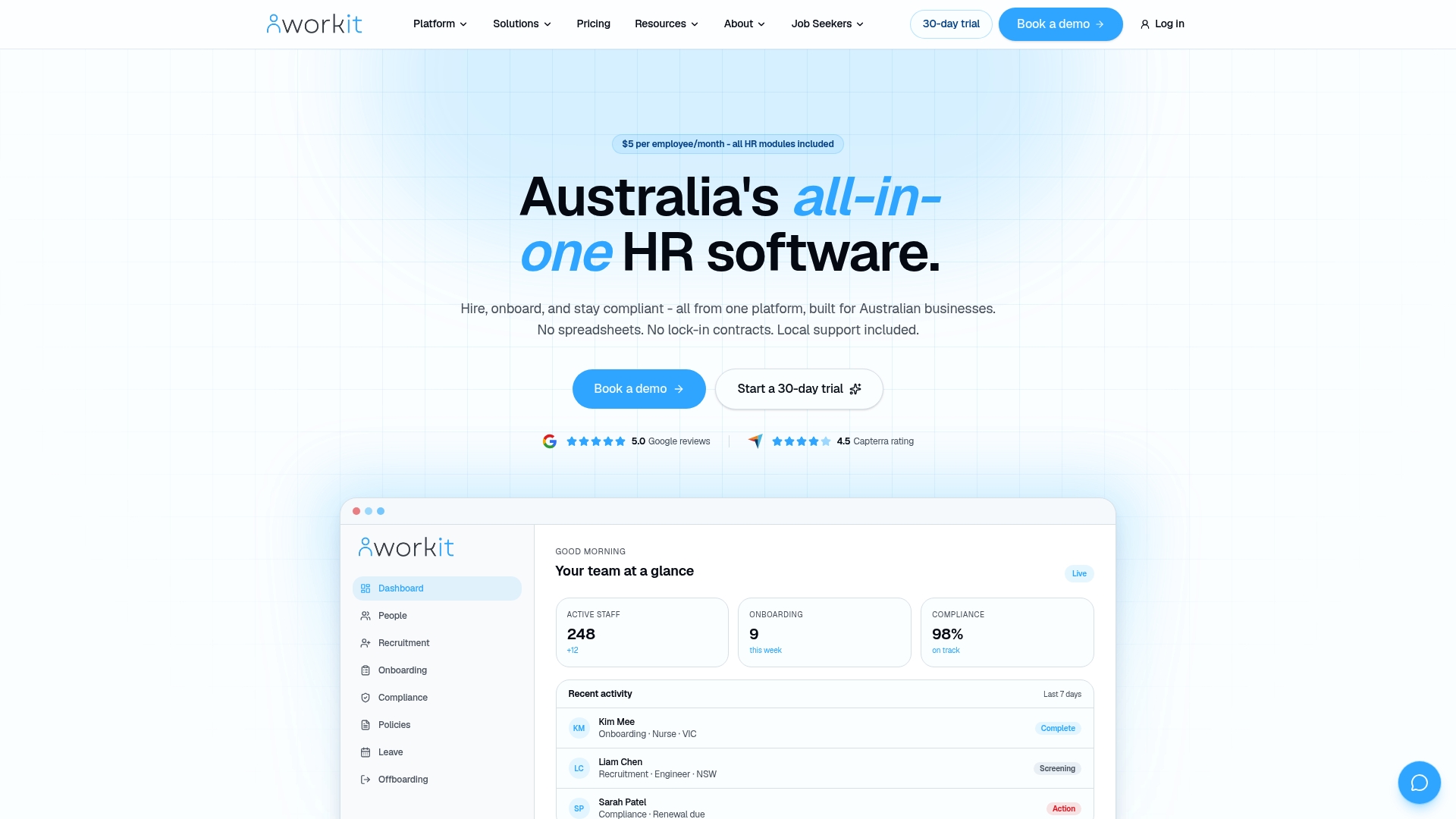
Workit is an all-in-one HRIS platform designed specifically for the Australian market, covering hiring, onboarding, compliance, and reporting in a single system at $5 per employee per month with no hidden fees. Every module is included, so you are not piecing together integrations between separate tools. Workit’s local support team understands Fair Work requirements and is available to guide your configuration, data migration, and staff training from day one through to post-launch. Book a demo to see how Workit supports a clean, confident implementation for your organisation.
FAQ
What is HR system implementation?
HR system implementation is the structured process of selecting, configuring, and deploying an HRIS to automate and centralise HR functions. It covers requirements gathering, data migration, system configuration, training, and post-launch support.
How long does an HR system implementation take?
Implementation timelines vary by organisation size and complexity, but most projects range from a few weeks for small businesses to several months for larger organisations. Data cleansing and training are the phases most likely to extend the timeline.
What is a cloud HR system?
A cloud HR system is an HRIS that operates on a SaaS model, hosted by the vendor and accessible via the internet. It reduces IT maintenance requirements and supports real-time data updates and integration with other business systems.
What is system integration in HR?
System integration in HR refers to connecting your HRIS with other business platforms such as payroll, finance, and applicant tracking systems. Integration eliminates manual data re-entry and improves accuracy across all connected systems.
Why does phased testing matter in HR implementation?
Phased testing with a pilot group identifies configuration errors and usability issues before the system rolls out to the full organisation. It reduces the risk of widespread errors affecting payroll, leave records, or compliance data at scale.