

Professional references: your complete 2026 guide
TL;DR:
- Professional references should be current managers, colleagues, or clients who can verify your skills and performance. Keep a pool of 3 to 5 references tailored to each application, and request their permission beforehand. Provide a separate reference page with full contact details only when requested, maintaining ongoing relationships with your referees.
Professional references are people who have directly supervised or closely worked with you and can validate your qualifications, skills, and reliability to a prospective employer. They differ from personal or character references, which come from friends or family and carry far less weight in a formal hiring process. Employers use job references to verify what your CV claims and to assess whether you will perform and behave as expected on the job. Getting this right matters more than most job seekers realise. A weak or vague reference can unravel an otherwise strong application, while a well-briefed referee can be the deciding factor between you and another candidate.
1. How many professional references do you actually need?

The standard is 3–5 references, though most employers ask for three to four. Always follow the employer’s instructions exactly when they specify a number.
Quality beats quantity every time. Three strong, specific endorsements from people who know your work well outperform five lukewarm contacts who barely remember you. The goal is a pool of credible, relevant people, not a long list.
- Maintain a pool of 3–5 references across different roles and contexts
- Tailor which references you submit to match each application
- Keep your pool current by staying in contact with past managers and colleagues
Pro Tip: Build your reference pool before you need it. Waiting until you have an interview lined up to reconnect with a former manager puts you under unnecessary pressure and risks a rushed, generic endorsement.
2. Who makes the strongest professional reference?
Former direct line managers are the gold standard. They can attest to your job performance and reliability within a specific role, which is exactly what employers want to hear. Ideally, choose someone you worked closely with for at least six months within the past seven years.
Strong secondary references include senior colleagues who observed your work daily, clients who can speak to your professionalism and results, and mentors who guided your development in a relevant field. Each of these contacts adds a different dimension to your professional profile.
| Reference type | Relationship | What they can speak to |
|---|---|---|
| Former direct manager | Supervised your work | Performance, reliability, specific achievements |
| Senior colleague | Worked alongside you | Teamwork, communication, day-to-day conduct |
| Client or stakeholder | Received your work | Professionalism, results, client-facing skills |
| Mentor or industry leader | Guided your career | Potential, character in a professional context |
| Family or close friend | Personal relationship | Nothing relevant. Avoid entirely. |
Family members or close friends carry an obvious bias and should never appear on a professional reference list. Avoid anyone who seemed unenthusiastic when you asked, anyone you barely worked with, or anyone whose contact details are outdated.
Pro Tip: Ask a potential referee directly: “Would you be comfortable giving me a strong reference?” The word “strong” gives them a graceful way to decline if they cannot, which protects you from a lukewarm endorsement.
3. How to request references professionally
Ask well in advance and only when a concrete opportunity arises. Asking too early risks outdated or generic letters. The optimal timing is when you have a confirmed interview or a job offer is likely.
When you reach out, give your referee everything they need to do a good job. The way you ask sets the tone for the entire relationship and directly affects the quality of the endorsement you receive.
A clear, professional request email should include:
- A brief reminder of your working relationship and the role you held
- The job title and organisation you are applying to
- A copy of your current CV
- The key skills and achievements you would like them to highlight
- The format the employer expects (written letter, phone call, or online form)
- The deadline for submission
“When you give your referee a clear picture of the role and what you want them to emphasise, you make it easy for them to advocate for you specifically. Vague requests produce vague references.”
Follow up with a thank-you message after the reference is submitted. Keep the relationship warm. These people are part of your professional network, and you may need their support again.
4. Who to avoid listing as a reference
Choosing the wrong person is as damaging as having no reference at all. Who you choose matters more than how many you list. Employers want factual, specific examples of your performance, not general character attestations.
Avoid these common mistakes:
- Family members or close friends. Bias is assumed and the reference adds no credibility.
- Former managers you left on bad terms. A negative or lukewarm reference is worse than a gap.
- Contacts you have not spoken to in years. Outdated references feel generic and may contain inaccurate details.
- People who agreed reluctantly. An unenthusiastic referee will sound unconvincing.
- Anyone who does not know your work well. A senior executive who barely knew you is not a strong reference, regardless of their title.
The role of reference checks in hiring is to verify and deepen what your CV already says. A referee who cannot speak specifically to your skills and results adds nothing to that process.
5. How to format your professional reference page
Keep references off your resume entirely. Best practice in 2026 is to prepare a separate reference page and provide it only when requested. This saves space on your CV and protects your referees’ contact details until they are genuinely needed.
Your reference page should match the visual style of your resume exactly. Use the same font, header, and layout so the two documents look like a set.
Each entry on your reference page should include:
- Full name
- Current job title
- Company or organisation
- Your relationship to them (for example, “Direct manager at ABC Pty Ltd, 2021–2024”)
- Phone number
- Email address
Include two contact methods for every referee. Employers expect both a phone number and an email address. A single contact method creates delays if one channel fails.
Name your file clearly. “Jane_Smith_References.pdf” is professional and easy to find in a recruiter’s inbox. Send it promptly when requested. Employers expect references after interviews, not on your resume or LinkedIn profile.
Pro Tip: Save your reference page as a PDF before sending. This locks the formatting and prevents the document from shifting layout when opened on a different device.
| Reference page element | What to include |
|---|---|
| Header | Your name, phone, email, and LinkedIn URL |
| Referee name | Full legal name |
| Referee title and company | Current role and employer |
| Your relationship | Role context and duration |
| Contact details | Phone number and email address |
| File name | FirstName_LastName_References.pdf |
6. Keeping your reference pool current
A diverse pool of three to five references across different roles and contexts lets you tailor your submission to each application. A reference who is perfect for a project management role may not be the right fit for a client-facing sales position.
Stay in contact with your referees even when you are not actively job seeking. A brief check-in every six months, sharing a relevant article or congratulating them on a career milestone, keeps the relationship genuine. When you do need to ask for a reference, it will not feel like an imposition.
Update your pool whenever your career changes significantly. If you move into a new industry, a new function, or a senior role, your reference pool should reflect that shift. Referees from five years ago in a different field carry less weight than recent contacts who know your current capabilities.
Key takeaways
Strong professional references require deliberate selection, clear communication, and proper formatting to support a successful hiring outcome.
| Point | Details |
|---|---|
| Quality over quantity | Three specific, credible references outperform five vague contacts every time. |
| Former managers first | Direct line managers provide the most credible, performance-specific endorsements. |
| Brief your referees clearly | Share the job details, your CV, and the skills you want highlighted before they are contacted. |
| Keep references off your resume | Provide a separate, formatted reference page only when the employer requests it. |
| Maintain an active pool | Keep 3–5 current references across different roles so you can tailor each application. |
What I have learned about references after years of watching hiring go wrong
The most common mistake I see is treating references as an afterthought. Job seekers spend weeks perfecting their CV and preparing for interviews, then scramble to find three names the night before they are needed. That panic produces exactly the kind of vague, unprepared endorsements that cost people offers.
The second mistake is assuming that a senior title makes a strong reference. A CEO who worked with you briefly and cannot recall specifics will sound far less convincing than a mid-level manager who supervised your work daily for two years. Specificity is what makes a reference credible. Employers are not impressed by names. They are impressed by detail.
Timing matters more than most people acknowledge. Asking for a reference too early in a job search, before you have a real opportunity in front of you, puts your referee on standby indefinitely. That is not fair to them, and it often results in a letter that feels generic because it was written without a specific role in mind. Wait until the moment is right, then ask clearly and give your referee everything they need.
The job seekers I have seen manage this well treat their reference pool like a professional relationship, not a transaction. They stay in touch, they say thank you, and they return the favour when they can. That approach produces the kind of genuine, enthusiastic endorsements that actually move hiring decisions.
— Stephen
How Workit supports your hiring and onboarding process
Managing references is one part of a broader hiring workflow that can quickly become disorganised without the right tools. Workit is built for Australian businesses that want a cleaner, faster way to manage recruitment from application through to onboarding new employees without the spreadsheets.
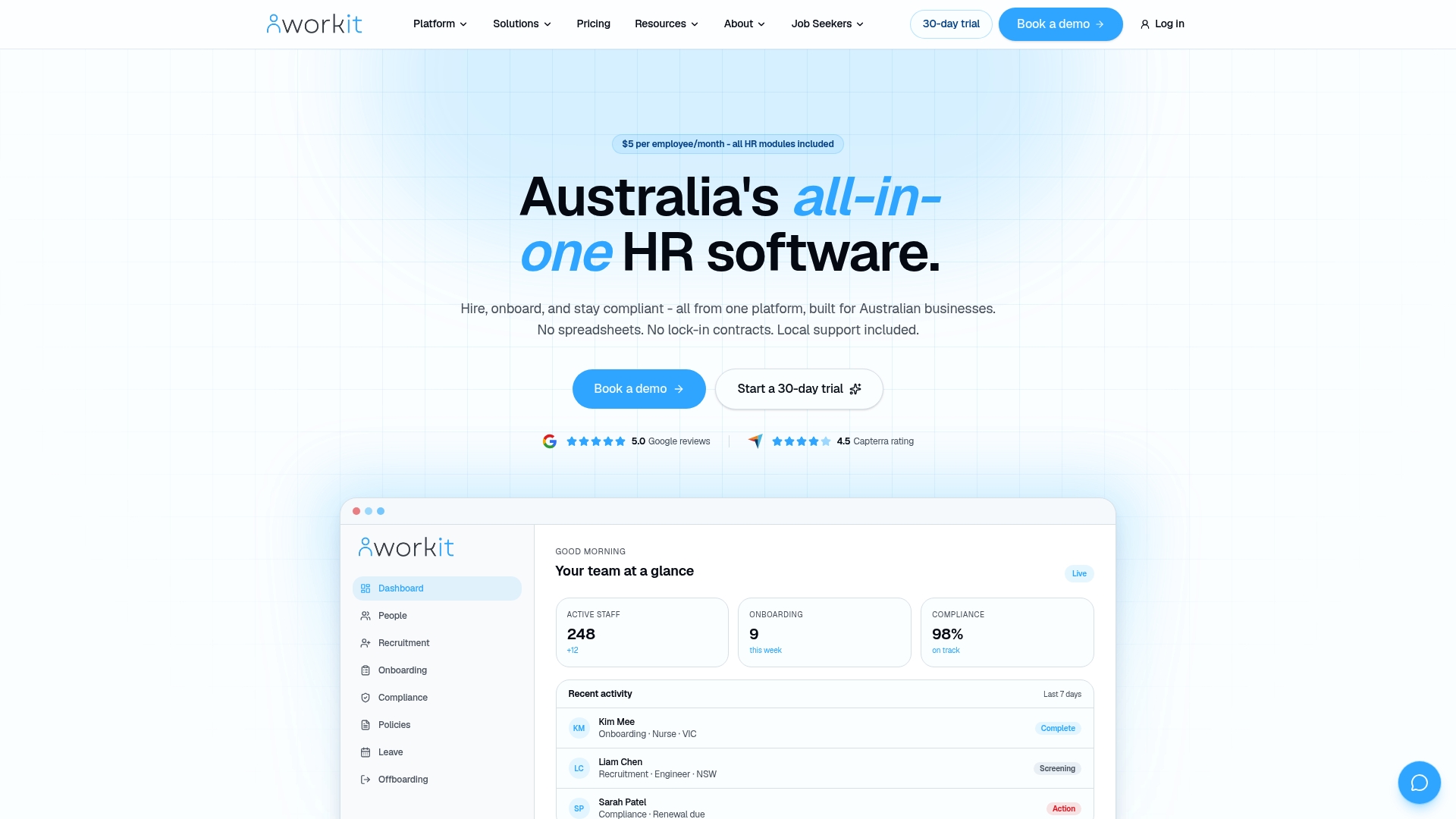
Workit’s recruitment software keeps candidate information, reference status, and hiring decisions in one place, so nothing falls through the gaps. At $5 per employee per month with all modules included, it is a practical choice for teams of any size. Book a demo to see how Workit can take the manual work out of your hiring process.
FAQ
What are professional references?
Professional references are people who can speak directly to your work performance, skills, and reliability in a professional context. They are typically former managers, senior colleagues, or clients, not family or friends.
How many references should I provide?
The standard is 3–4 references, though you should always follow the employer’s specific instructions. Maintain a pool of 3–5 so you can tailor your selection to each role.
Should I list references on my resume?
No. Best practice in 2026 is to keep references off your resume and provide them on a separate, formatted page only when the employer requests them.
When should I ask someone to be a reference?
Ask when you have a confirmed interview or a job offer is likely. Asking too early risks a generic or outdated endorsement. Give your referee enough notice and full context about the role.
What information goes on a professional reference page?
Each entry should include the referee’s full name, current job title, company, your relationship to them, and two contact methods: a phone number and an email address.